We flew from Lima to Cusco, and started a short tour of Cusco before
heading for the Sacred Valley. Our only stop in Cusco was the Sun
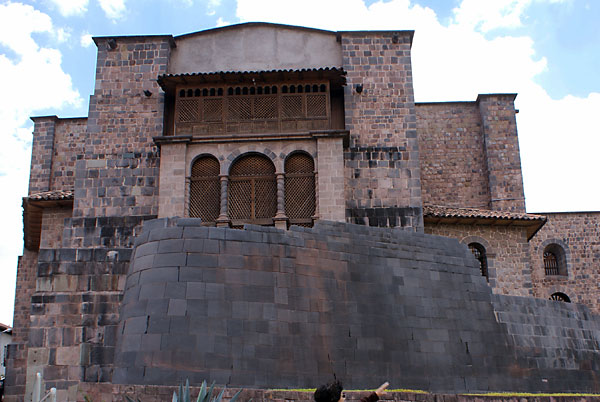
Temple. It was built by the Incas in the last half of the 15th century
and destroyed by the Spaniards when they conquered Cusco in the
first half of the 16th century. The large dark stones are part of the
outer wall of the Inca temple. The Spaniards built the Church of Santo
Domingo on top of the ruins of the Sun Temple.
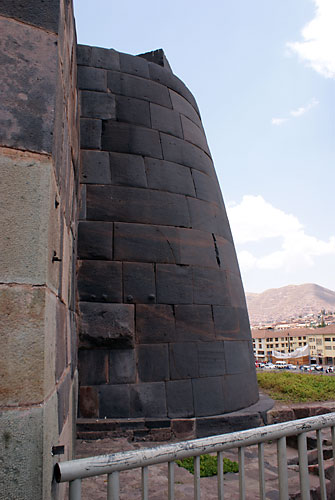
A side view of the Inca wall. The stone blocks fit together perfectly
without mortar. Note that the wall is slanted, not vertical; this is a
common feature of Inca walls. The wall has survived two large
earthquakes that have done major damage in Cusco.
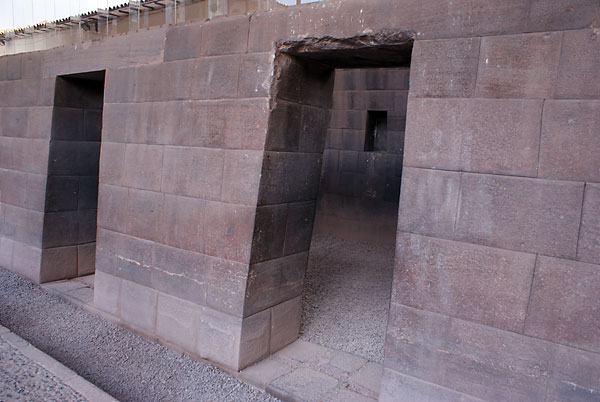
Entering the church, which is now a museum, we could see some of the
interior walls of the Sun Temple. Some parts of the walls are original
and some parts have been reconstructed. The doorways are trapezoidal,
not rectangular, which is also a common feature of Inca construction.
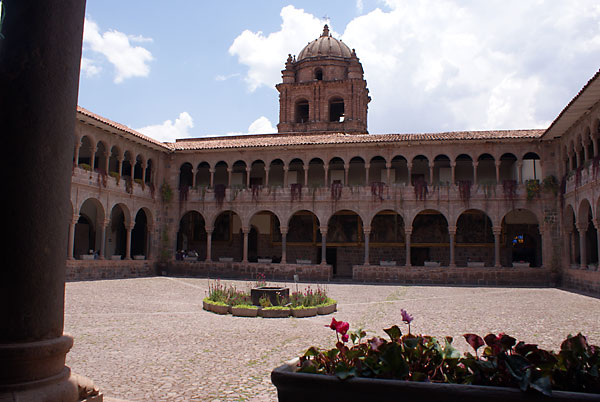
The coutyard for the Church of Santo Domingo. It is classsic Spanish style.
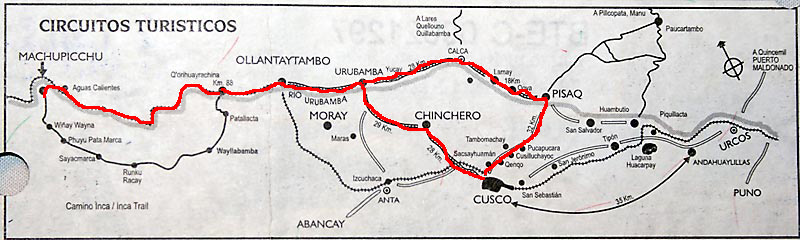
Map of the Cusco - Sacred Valley - Machu
Picchu region. Our tour took us from Cusco to Pisac, Urubamba (where we
stayed two nights), Ollantaytambo, Agua Callientes (where we stayed one
night), Machu Picchu, and back to Cusco.
Heading on towards the Sacred Valley, we stopped at a farm with Alpacas
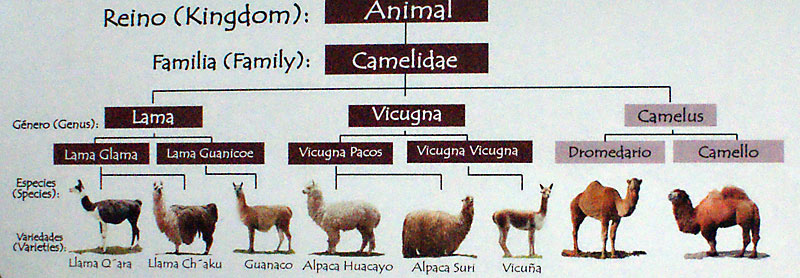
and Llamas. They had this interesting chart of the relationship
of the Llama, Guanaco, Alpaca, Vicuna animals. The Llama and Alpaca
have been domesticated, while the Guanaco and Vicuna are wild.
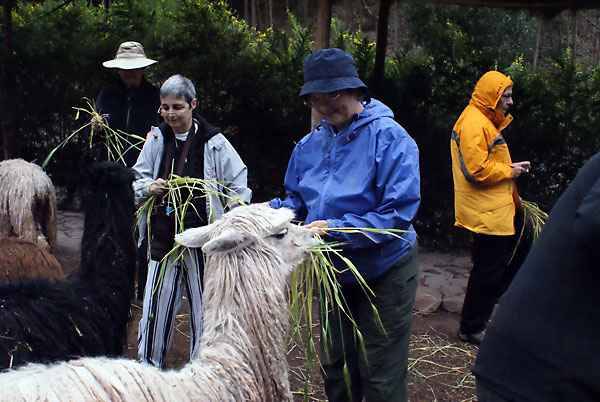
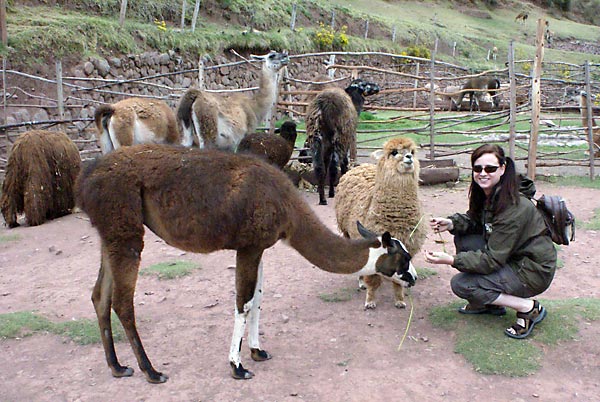
Nancy and Sandy are having a good time feeding some of the animals. I'm
not sure whether these are Llamas or Alpacas; the way to tell the
difference is the tail - the Llamas always have their tails up, while
the Alpacas have their tails down.
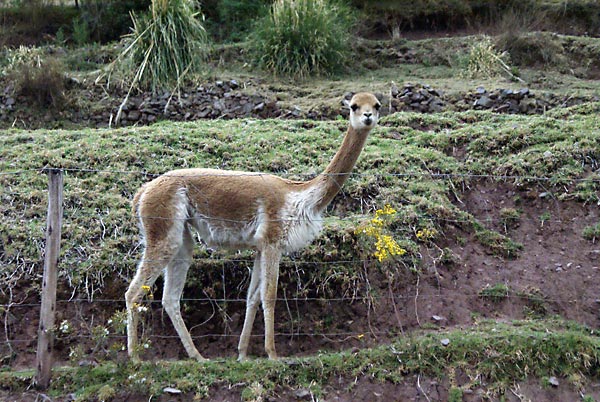
This is a vicuna; note the slender appearance.
Heather is having a good time feeding this alpaca, whle another looks on. In the background is a llama with its tail up.
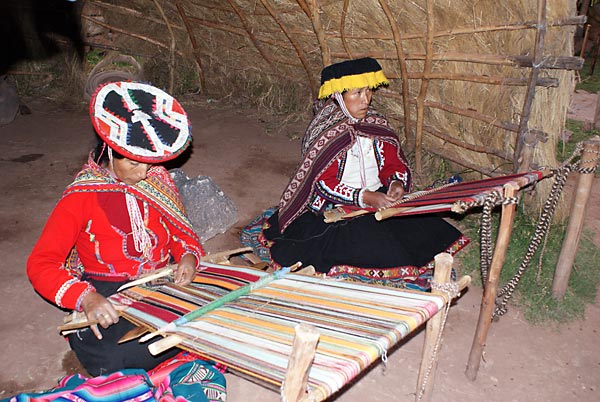
At the farm they make the wool into yarn and weave it into cloth. These
two weavers are dressed in their traditional clothing. This is
part of a private project involving 14 communities to promote the
ancestral process of weaving as their way of life.
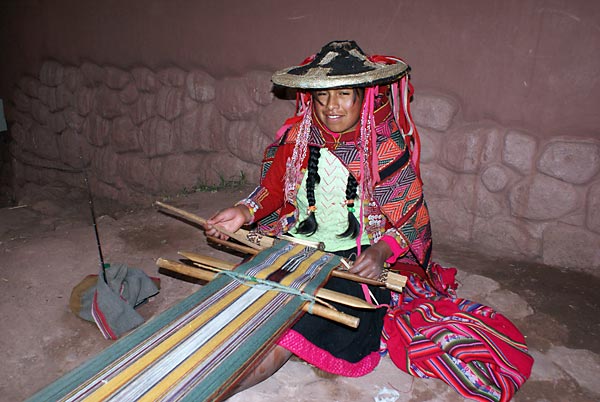
I managed to get this weaver to smile for me.
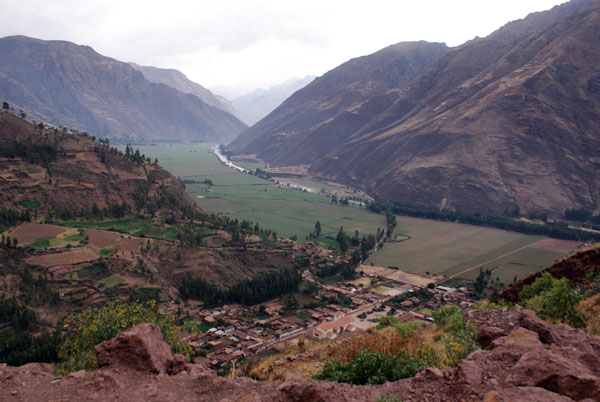
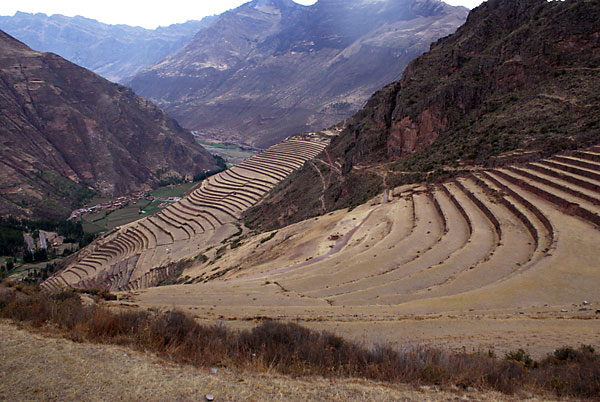
A view of the Sacred Valley with the town of Pisac below. We drove down
into the valley and partway up the other side to see some Inca terraces.
Some of the Inca terraces on the slopes above the Sacred Valley.
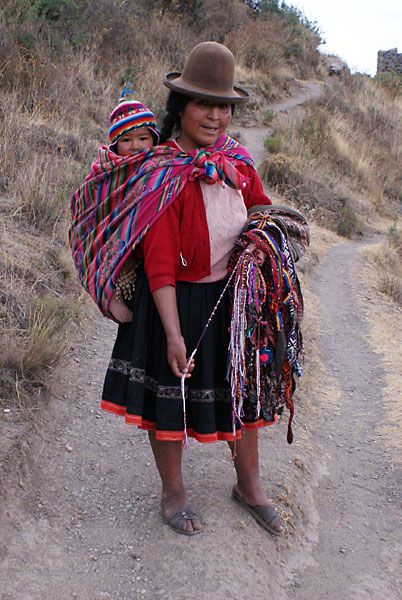
An Andean woman with her baby. The woman is trying to make some money
selling the items on her arm to tourists. Note that the baby has bare
feet, even though the weather is cool and it is starting to rain.
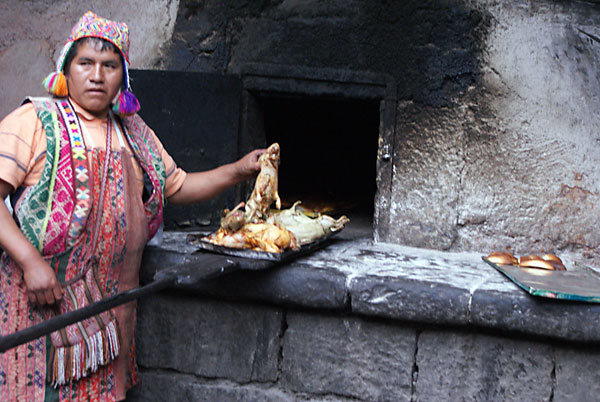
Descending to the town of Pisac, we strolled through the town and came
upon this person who was roasting guinea pigs. They are considered a
delicacy that the Peruvians eat on special occasions (we tried some
later in the week).